Window Tint in North Phoenix

Services · 08 of 13

Window Tint in North Phoenix

Window tint for Arizona heat: precision-cut film for trucks, SUVs, and cars, installed in north Phoenix.

Quick answer

Where can I get window tint in North Phoenix or Deer Valley?

Luxe Motorsports installs precision-cut window tint for trucks, SUVs and cars at its Deer Valley shop in North Phoenix. The film choice, the windows included and Arizona tint limits are discussed before install, so you get the heat rejection and look you want within Arizona limits.

Shop
Luxe Motorsports, 747 W Pinnacle Peak Rd, Ste A105, Phoenix, AZ 85027
Area
Deer Valley, North Phoenix; a short drive from north Scottsdale, Anthem and Peoria
Vehicles
Trucks, SUVs and cars
Hours
Mon–Fri 9:00 AM – 4:00 PM; Sat/Sun Closed
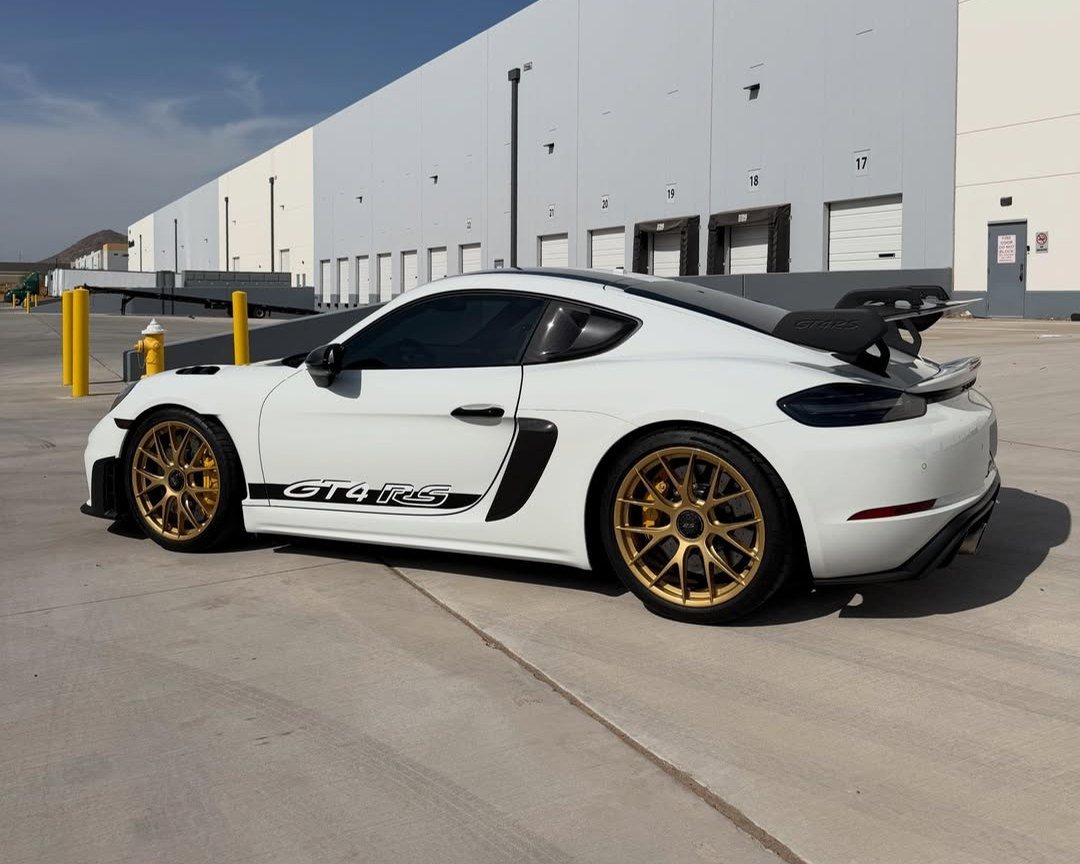
Porsche GT4 RS side glass after ceramic window tint in the Luxe build

Porsche GT4 RS: ceramic window tint listed alongside its wheel and roof-stripe work.

Window tint

Choose comfort. Not just a darker window.

Shade, glare and heat rejection are related, but they are not the same specification. Two films that look equally dark can perform differently in the sun. Ceramic window film uses non-metallic ceramic technology to manage solar heat; a lighter high-performing film can be a better comfort choice than simply choosing the darkest glass.

Luxe fits window film to cars, trucks and SUVs in the Deer Valley shop. Ceramic tint appears in our Porsche GT4 RS, Raptor R and Sierra builds as well as family vehicles. Tell us whether the priority is a bright westbound commute, rear-seat comfort or a cleaner look, and keep night visibility and Arizona’s limits in the same conversation.
Understand the material

Dyed, carbon and ceramic film, compared.

This is a comparison guide. Ask for the current series and its actual data sheet; category names alone do not tell you the performance.

01

Dyed film

Uses dye to absorb visible light, giving shade and reducing glare. It is usually the simpler route when appearance is the main goal. Heat performance varies with the product and shade, so darkness alone should not be used as the thermal specification.

  • Look for: shade, optical clarity and stated durability
  • Do not assume low VLT means high infrared rejection

02

Carbon film

Uses carbon-based material rather than relying only on dye for its appearance and solar performance. Many carbon films are metal-free, which avoids a metallized layer around electronics. It can sit between basic dyed and premium ceramic options, but the data sheet is the useful comparison.

  • Look for: TSER at the shade you are comparing
  • “Carbon” is a construction category, not one fixed rating

03

Ceramic film

Uses ceramic technology to manage solar energy without requiring a metallic construction. It is a useful place to start when comfort matters as much as the look. The specific formulation and VLT still matter: ceramic is not a promise that every grade rejects the same heat.

  • Look for: total solar energy and comparable IR measurements
  • Ceramic tint is documented on multiple Luxe projects

Read the data sheet

Three numbers worth understanding.

Compare films at similar visible-light transmission and on the same test glass. A large percentage without the measurement definition is not a meaningful side-by-side comparison.

VLTHow much light passes
Visible Light Transmission describes the share of visible light that passes through the film-and-glass system. Lower means darker. It is a visibility and legal-compliance measure, not a complete heat-rejection rating.
TSERTotal solar energy rejected
TSER measures the total solar energy rejected by the tested glazing system. It is useful for comparing overall solar performance at a similar shade. Ask which glass and testing conditions the published figure uses.
IRRead the wavelength range
Infrared rejection figures may use different wavelength ranges or methods. A headline IR percentage is not the same as TSER, and two differently measured IR claims should not be treated as identical. Use the manufacturer’s full data sheet, not one sales number.

Factory glass counts too. A theoretical 70% glass × 50% film combination transmits about 35% visible light—not 50%. Actual installed transmission should be checked rather than inferred from the film label.

Arizona tint guidance

The glass and the film count together.

Arizona’s statute measures light transmission through the complete combination, including the glazing. A film marked “35” is not automatically a legal installed result.

A.R.S. § 28-959.01

Front side windows
The statute specifies 33% light transmission, plus or minus 3%, and luminous reflectance of 35%, plus or minus 3%. Choose for compliant measured glass—not to exploit the tolerance.
Behind the driver
Rear side windows have a luminous-reflectance limit of 35%, plus or minus 3%, or less. The rear-window exception requires outside mirrors on both sides that provide the specified rearward view. Darker rear glass still affects visibility after dark.
Windshield
The ordinary tint exception is for the topmost portion, with the lower edge at least 29 inches above the undepressed driver’s seat, measured from a point 5 inches ahead of the backrest with the seat fully rearward and lowest. The material cannot be red or amber. Do not assume a full-windshield film is permitted simply because it is light.

Medical exemptions require department approval supported by a physician’s attestation. Check the current Arizona statute, especially if the vehicle is registered elsewhere or regularly travels across state lines.

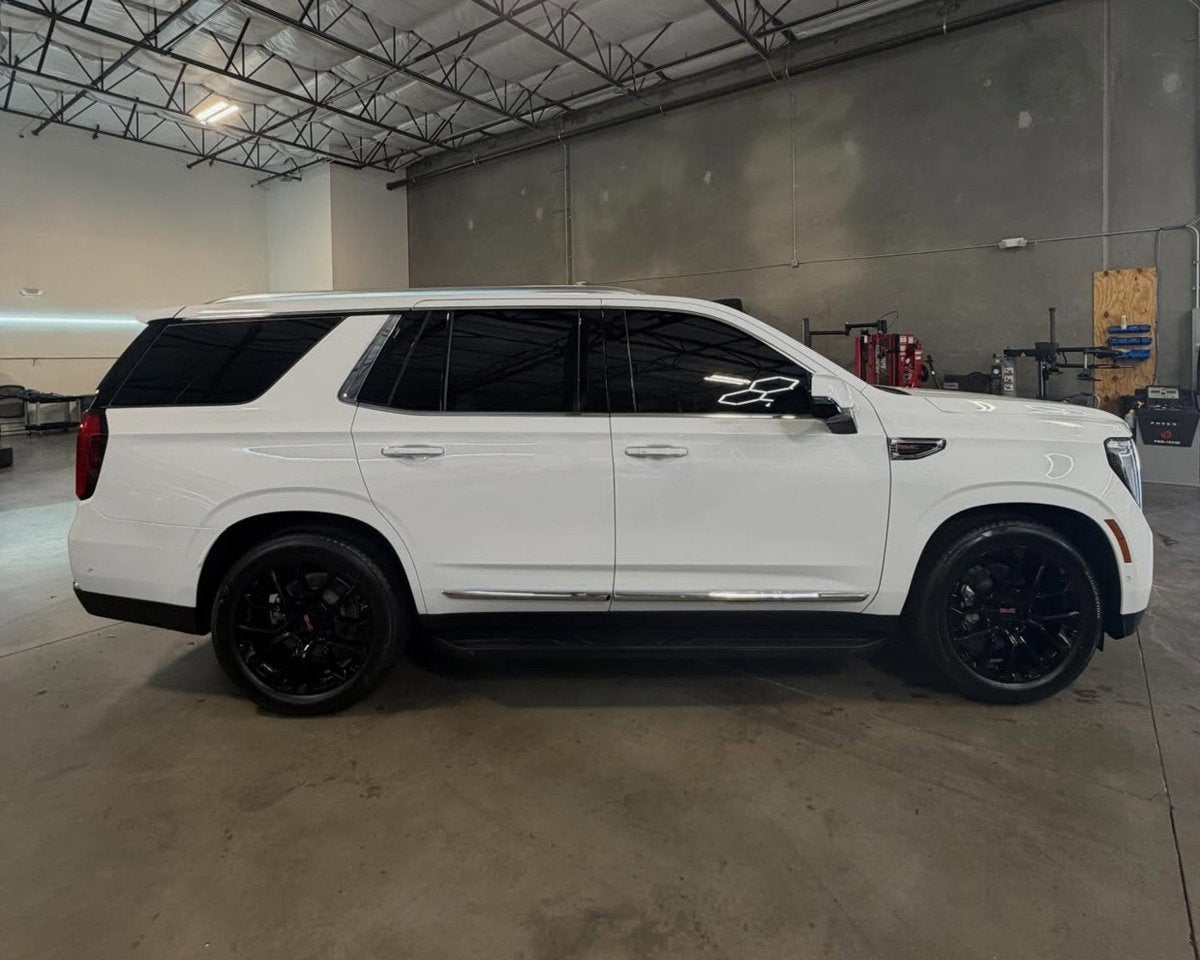
Side view of the GMC Yukon documented with full ceramic tint by Luxe

GMC Yukon: full ceramic tint documented by Luxe. Photograph is not a VLT or legal-shade reference.

For the way you drive

Matching the look is only half the decision.

Factory privacy glass is darkened glass, not proof of a particular aftermarket film’s heat performance. On a truck or SUV, matching the front doors to the rear visually is a different task from choosing a compliant front-door result and improving comfort across the cabin. Start with what is on the vehicle now.

On a coupe, the shape and size of the back glass, seals and access change the installation. On a family SUV, third-row glass and rear-seat exposure may matter more. Tell us about existing tint, old adhesive, scratches or glass replacements before the quote; removal is quoted as its own line item.

The pictured Yukon received full ceramic tint as part of its Luxe build. Your vehicle still needs its own shade and legality discussion. A photo cannot tell you its measured VLT, and a look you like on another vehicle is not a legal specification for yours.

The shop sequence

Shade first. Specs second. Fitment throughout.

  1. Step 01

    Assess the glass

    Tell us the vehicle and which windows you want addressed. Existing film, factory privacy glass, old adhesive and your night-driving needs all matter. Check the front-door limits before settling on the appearance.

  2. Step 02

    Choose the film

    Compare the available series at the intended shade, including TSER and the definition of any IR number. Confirm the actual windows, any removal work, quote and schedule before the install.

  3. Step 03

    Clean & fit

    Glass preparation, film fitment and clean edges matter as much as the shade choice. Luxe uses film cut for the windows rather than a one-size sheet; curved glass and access determine the work involved.

  4. Step 04

    Cure & care

    Follow the instructions for how long to keep the windows up and when to clean them. Some moisture haze can clear during drying; lifting edges or persistent defects should come back to the installer, not be pressed or picked at.

After the install

Give the film time to settle.

The right wait time depends on the product and conditions. Phoenix heat is not permission to ignore the supplied cure instructions.

During curing

Keep the glass up for the period given at hand-off and avoid cleaning the new film until allowed. Temporary haze or small moisture pockets can occur while installation solution dries. Do not scrape them, push them to the edge or use a heat gun.

If you see a loose edge, a large air pocket or a mark that is not improving, contact the shop. Drying moisture and a trapped contaminant are not the same thing.

For regular cleaning

Use a clean, soft microfiber and a mild cleaner approved for the film. Avoid abrasive pads, scrapers and dirty towels. Protect the lower edge from grit and be careful with sharp seat-belt hardware around side glass.

Film reduces incoming solar load; it does not replace air conditioning or make a parked vehicle safe for a child or pet. A vehicle left in the Arizona sun will still get dangerously hot.

Before you book

Questions about window tint.

Is ceramic tint always darker than regular tint?

No. Ceramic describes the film technology, while VLT describes how much visible light passes through. Ceramic films are available in different shades. Compare heat-performance data at similar VLT rather than assuming the darker-looking film is the better heat barrier.

What is the legal front-window tint in Arizona?

A.R.S. § 28-959.01 specifies 33% light transmission, plus or minus 3%, and luminous reflectance of 35%, plus or minus 3%, for front side windows. Transmission includes the glazing and the applied material together. A film label alone does not establish the installed result.

Can I tint the entire windshield?

Do not assume so. Arizona’s ordinary exception covers the topmost portion under a specific seat-based measurement and excludes red or amber material. A full-windshield film is not automatically allowed because it is light. Medical exemptions require department approval; check the current statute before choosing coverage.

Does factory privacy glass do the same job as ceramic film?

Not necessarily. Dark factory glass is not proof of the same solar performance as a particular ceramic film. The existing glass, installed film and their combined VLT all matter. Matching the appearance of front and rear glass is separate from choosing legal, comfortable performance.

When can I roll down or clean the windows?

Follow the instructions for the film installed and the conditions at the time of installation. Keep the glass up and avoid cleaning for the stated period. Temporary moisture haze may clear as it dries; contact the shop about lifting edges or persistent defects rather than disturbing the film.

What changes the price and appointment length?

Vehicle shape, the number and size of windows, the film series, access to curved glass and any existing-film or adhesive removal affect the work. Luxe confirms the scope, quote and schedule for your vehicle rather than publishing one price or time for every car.

Get a quote

Bring us the vehicle.

Mon–Fri 9:00 AM – 4:00 PM; Sat/Sun Closed

Visit the shop

Window tint in north Phoenix and Deer Valley.

Luxe Motorsports is on Pinnacle Peak Rd in the Deer Valley area of north Phoenix, a short drive from north Scottsdale, Anthem, and Peoria. Stop by on a weekday, or call and talk through the vehicle.

Luxe Motorsports 747 W Pinnacle Peak Rd, Ste A105 Phoenix, AZ 85027 (602) 900-0720 Sales@LuxeMotorsportsAZ.com Mon–Fri 9:00 AM – 4:00 PM; Sat/Sun Closed