Custom Wheels and Tires in North Phoenix

Services · 03 of 13

Custom Wheels and Tires in North Phoenix

Custom wheels, tires, and fitment for trucks, SUVs, and performance vehicles, mounted and balanced in north Phoenix.

Quick answer

Who installs custom wheels and tires in North Phoenix?

Luxe Motorsports fits, mounts and balances custom wheels and tires at its Deer Valley shop in North Phoenix. Fitment is checked against the vehicle, the suspension and the exact tire size before you order, so the package clears at steering lock and through suspension travel.

Shop
Luxe Motorsports, 747 W Pinnacle Peak Rd, Ste A105, Phoenix, AZ 85027
Area
Deer Valley, North Phoenix; a short drive from north Scottsdale, Anthem and Peoria
Vehicles
Trucks, SUVs and performance cars
Hours
Mon–Fri 9:00 AM – 4:00 PM; Sat/Sun Closed
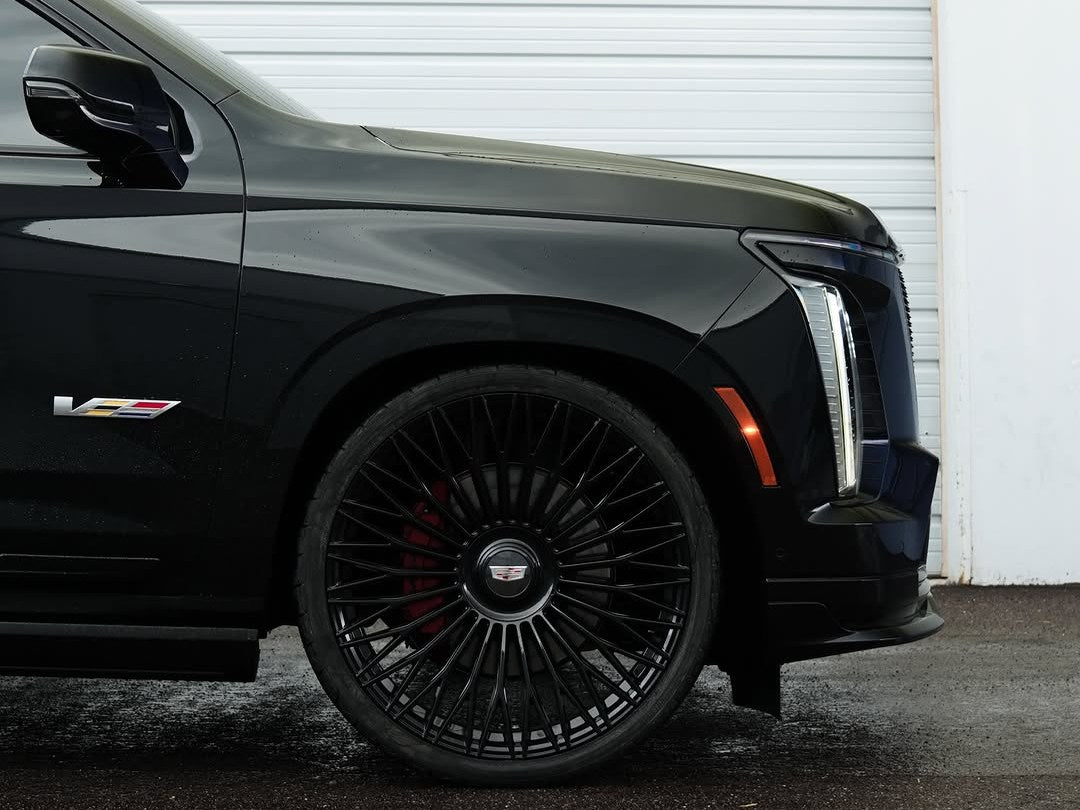
Black Escalade V front wheel with TIS multi-spoke design and floating Cadillac center cap
Luxe build: Escalade V / 26×10 TIS 507B / 305/30R26. The wheel, tire and lowered stance were planned together.

Wheels & tires / North Phoenix

The stance is the starting point. Fitment finishes the job.

A wheel can have the right diameter and still be wrong for the vehicle. Width, offset, brake clearance and load capacity decide whether the package actually works. The tire adds another set of decisions: its real section width, overall diameter, tread and the load it needs to carry.

At Luxe, wheel and tire selection, mounting, balancing and tire-pressure sensor setup are part of the same conversation. Tell us whether this is a daily-driven SUV, a loaded work truck or a weekend car. We can work toward the look without ignoring the way you use it.

The Escalade V shown here left Luxe on 26×10 TIS 507B wheels with 305/30R26 tires and custom floating center caps. That is a documented build, not a universal fitment recommendation.

Luxe sources wheels including TIS, Vossen, KMC, Hostile, Lock Offroad and Price Designs lines such as KG1 Forged, JTX Forged, MV Forged and BBS, along with other designs. Tire choices include Giovanna, Toyo, Nitto and BFGoodrich. KW coilovers can be part of a stance package when that is the brief. The right combination is still the one that fits your vehicle and how you drive.
Choose the wheel

Cast, flow-formed or forged?

These describe how a wheel is made, not whether it fits your truck. Compare the actual wheel’s published weight, load rating and application—not just the badge on the box.

01 / Construction

Cast

Molten aluminum is formed in a mold. Casting gives manufacturers a broad range of designs and usually the most accessible price point. A properly rated cast wheel can be a sensible street choice; low cost alone is not a reason to overlook load capacity.

Best starting point
A daily driver where style, fitment and value lead the brief.
Tradeoff
Achieving the required strength can mean more material and more weight.
Ask before ordering
What does this exact size weigh, and what is its load rating?

02 / Construction

Flow-formed

A cast center is paired with a rim barrel shaped under heat and pressure as it spins. The process can reduce barrel weight compared with a conventional cast design. It does not make the entire wheel a fully forged wheel.

Best starting point
A balance of street use, weight and cost.
Tradeoff
The actual design still matters; not every flow-formed wheel is lighter than every cast wheel.
Ask before ordering
Is the fitment and brake clearance confirmed for my trim?

03 / Construction

Forged

Aluminum is formed under high pressure before the wheel is machined. The process can deliver strength with less material, and some designs offer custom sizing. Forged options Luxe works with include KG1 Forged, JTX Forged and MV Forged, along with BBS and other Price Designs lines. The benefit needs to make sense for the vehicle—not just the build sheet.

Best starting point
A weight-conscious performance build or a specific custom fitment.
Tradeoff
A higher purchase price, and potentially a longer lead time for custom work.
Ask before ordering
Does the individual wheel meet the truck’s axle-load requirement?

The fitment brief

Six checks before the wheels go on.

“It bolts up” is not the same as “it fits.” These are the details that separate a coordinated package from one that rubs, vibrates or carries the wrong load.

01Bolt pattern & center bore
The lug count and pitch-circle diameter must match the hub. The center bore must suit the application, with the correct centering hardware where required. A close-looking bolt pattern is not an acceptable substitute.
02Offset & backspacing
Offset is the distance from the wheel’s centerline to its mounting face, measured in millimeters. Backspacing measures from that face to the inner wheel edge. Width changes the relationship, so two wheels with the same offset can sit very differently.
03Brake & suspension clearance
Diameter alone does not establish brake clearance. Spoke shape and barrel profile must clear the caliper; the inner rim and tire must also clear suspension components. Clearance needs to hold through steering travel, not just while parked straight.
04Wheel & tire load ratings
Both need enough capacity for the vehicle and its axle ratings. This matters especially on an HD truck that tows or carries a bed load. A larger tire or more expensive wheel does not increase the vehicle’s payload or tow rating.
05Tire width & overall diameter
The tire must be approved for the wheel width. Its overall diameter affects gearing, indicated speed and clearance. Even two tires with the same nominal size can differ in their published dimensions.
06Hardware & sensors
The lug seat, thread and hardware must match the wheel and vehicle. Direct TPMS sensors need compatible wheel mounting and the correct vehicle protocol; retaining the warning system is part of a complete package.
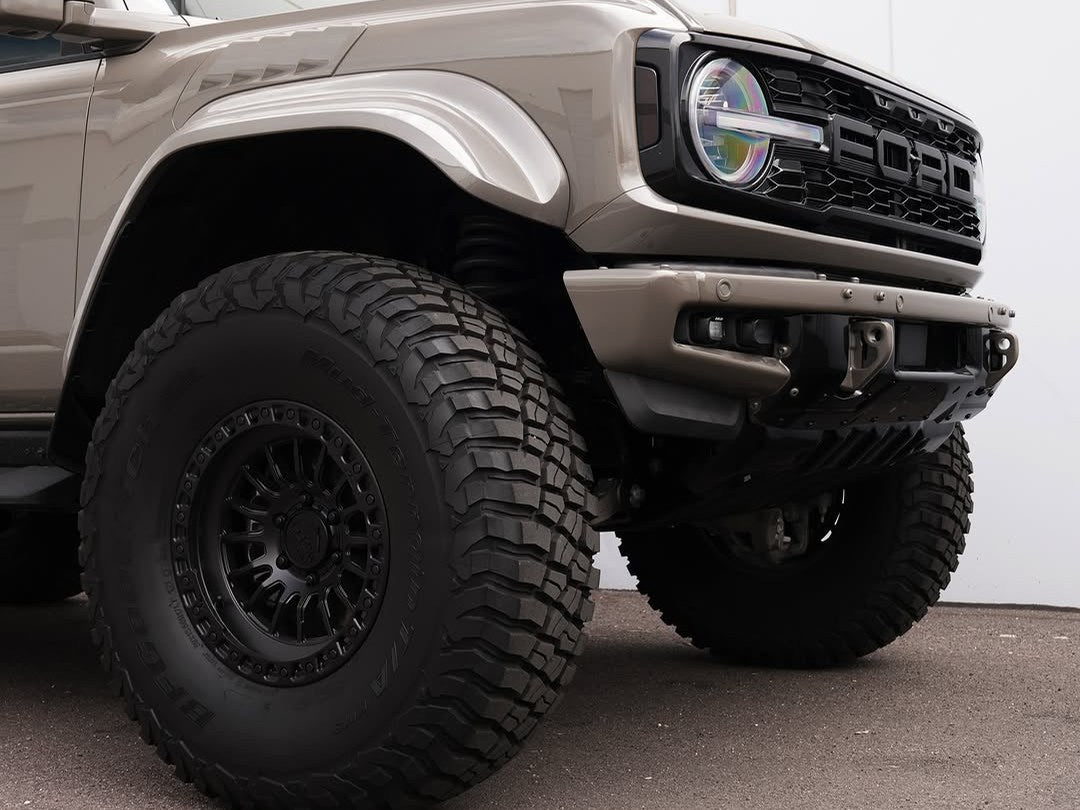
Bronco Raptor front wheel and 39-inch BFG tire with visible fender clearance
Luxe build: Bronco Raptor / 17-inch Lock Offroad wheels / 39×13.50R17 BFG tires. This combination belongs to this vehicle and its spring package.

Street miles. Desert weekends.

Choose the tire before you choose the lift.

A bigger wheel is not the same thing as a bigger tire. On a street SUV, a larger wheel can retain a similar overall tire diameter by using a shorter sidewall. On a truck build, moving to a taller tire changes clearance and effective gearing as well as appearance.

For a lift or level, start with the actual tire dimensions and the kit manufacturer’s wheel-width and backspacing requirements. Steering lock, suspension movement, liners and body mounts all matter. A “3-inch level” is not a blanket promise that every 37-inch tire will clear.

Tread is a separate choice. A highway-oriented tire usually makes more sense when most miles are pavement. An all-terrain is a compromise for mixed use; an aggressive mud-terrain brings a different noise and road-manner tradeoff. Tell us how often the truck really leaves the road.

From the shop

Two very different wheel briefs.

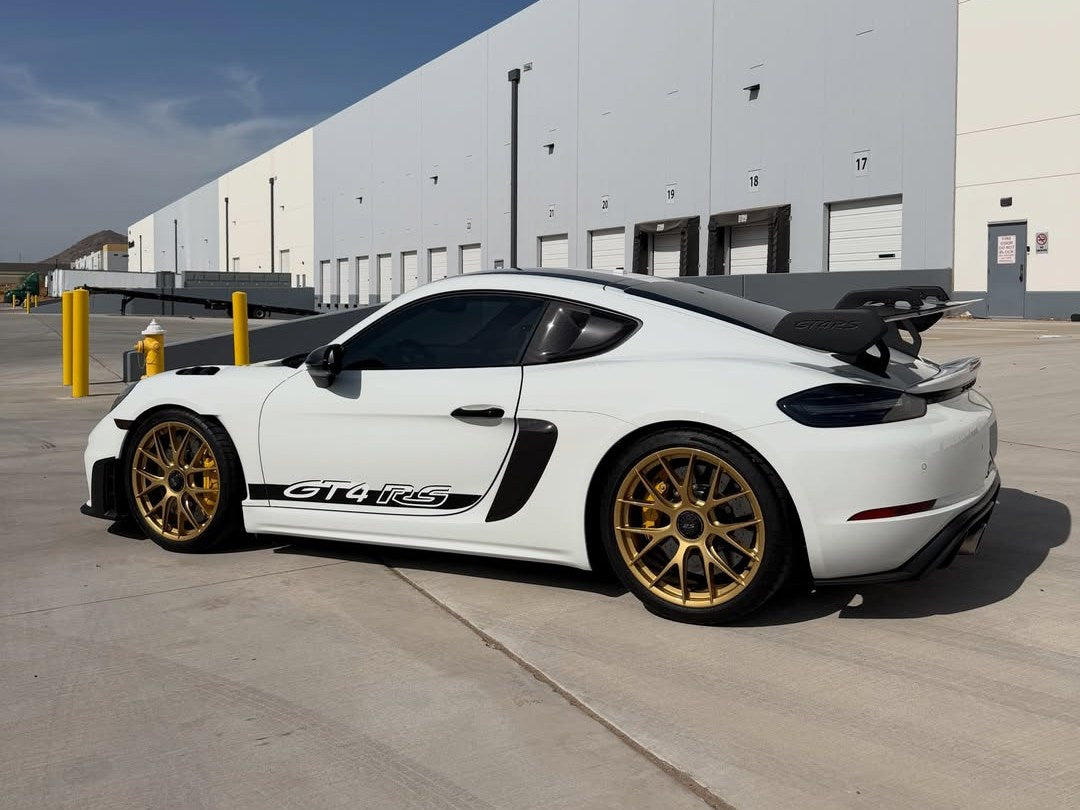
White Porsche GT4 RS with wheels refinished in Subtle Gold
GT4 RS / a finish change, not a size change.Luxe documented these wheels powdercoated in Prismatic Powders “Subtle Gold.” Sometimes the right move is refining the wheels already on the car.
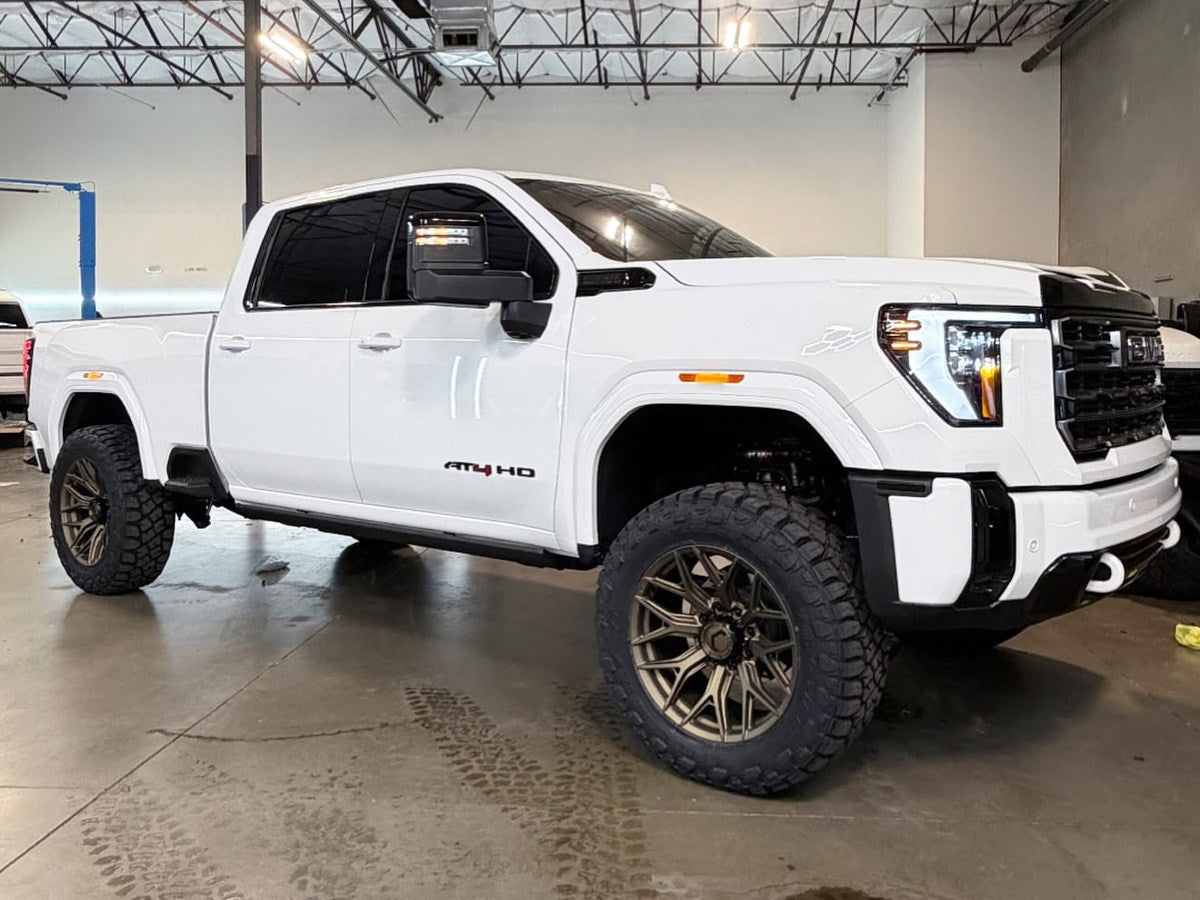
White Sierra AT4 HD on bronze Vossen wheels and Toyo tires
Sierra AT4 / wheels and suspension together.This build paired 22-inch Vossen HF6-4 wheels, −18 offset and 37×12.50R22 Toyo RT Pro tires with a Cognito level. Those measurements are a completed build sheet, not a fitment shortcut for another truck.

The shop visit

From measurements to a finished package.

  1. Step 01

    Bring the details

    Year, make, model and trim, plus current suspension, tire size and any brake changes. If you tow, share that too. A photo helps with the look; measurements settle the fit.

  2. Step 02

    Confirm the package

    Agree on wheel dimensions, tire model, load capacity and the finished stance. Pair any lift or level with the wheel specification before parts are ordered.

  3. Step 03

    Mount & balance

    The tire and wheel are assembled and balanced, with sensor compatibility and the correct lug hardware addressed as part of the package.

  4. Step 04

    Know the aftercare

    Leave with the pressure guidance and lug re-check instructions for the combination. Vibration, a warning light or contact at full lock deserves a call—not a wait for it to wear in.

Keep it right

Balance, alignment and pressure do different jobs.

Balancing addresses uneven mass in the rotating assembly. Alignment sets the suspension’s angles. One is not a replacement for the other.

A complete package needs a maintenance plan.

Check cold tire pressure regularly, follow the tire and vehicle guidance for the actual fitment and load, and ask about rotation—some staggered or directional combinations limit the pattern. A TPMS light is a warning, not a pressure-setting tool. If the truck starts pulling or wearing an edge, have the cause checked rather than assuming larger tires are supposed to do that.

Technical references: Tire Rack fitment guide · wheel construction · plus sizing.

Plan the visit

What changes the quote and the shop time?

  • Wheel construction, diameter, width and finish, plus the selected tire model
  • Sensor compatibility, service parts and correct lug hardware
  • Any suspension, alignment or body-clearance work needed for the combination
  • Parts availability and whether the wheels are a stocked or custom specification

A mount-and-balance visit is not the same schedule as a complete suspension and tire change. Confirm the parts list and timing when the quote is written.

Before you book

Good questions. Straight answers.

Will 35s or 37s fit with a leveling kit?

There is no universal answer. Vehicle, kit, wheel width, offset and the tire’s actual dimensions all matter, along with clearance at steering lock and through suspension travel. Send the exact vehicle and the tire you want so the package can be checked before you order.

What is the difference between offset and backspacing?

Offset measures the distance between the wheel centerline and mounting face in millimeters. Backspacing measures from the mounting face to the inner wheel edge. Wheel width affects backspacing, so offset by itself does not tell you the final clearance.

Are forged wheels always the best choice?

No. Forging can offer a useful strength-to-weight advantage, but the best choice also depends on the individual wheel’s rating, dimensions, use and cost. A properly rated cast or flow-formed wheel can be a better match for a daily driver.

Can I keep my tire-pressure sensors?

Often, but compatibility needs checking. Direct TPMS sensors must suit both the new wheel and the vehicle, and may need service parts or a relearn. Include the year, model and existing sensor information when you request a quote.

Will bigger wheels make the ride harsher?

They can when a shorter tire sidewall is used to keep overall diameter similar. There is less sidewall to cushion impacts, and some packages add weight. The tire model, pressure and suspension also influence the result.

Do you mount and balance the tires?

Yes. Luxe offers mounting and balancing along with fitment selection and tire-pressure sensor setup. Ask for the complete package quote, including the wheel and tire specification and any required hardware.

Get a quote

Bring us the vehicle.

Mon–Fri 9:00 AM – 4:00 PM; Sat/Sun Closed

Visit the shop

Wheels and tires in north Phoenix and Deer Valley.

Luxe Motorsports is on Pinnacle Peak Rd in the Deer Valley area of north Phoenix, a short drive from north Scottsdale, Anthem, and Peoria. Stop by on a weekday, or call and talk through the vehicle.

Luxe Motorsports 747 W Pinnacle Peak Rd, Ste A105 Phoenix, AZ 85027 (602) 900-0720 Sales@LuxeMotorsportsAZ.com Mon–Fri 9:00 AM – 4:00 PM; Sat/Sun Closed